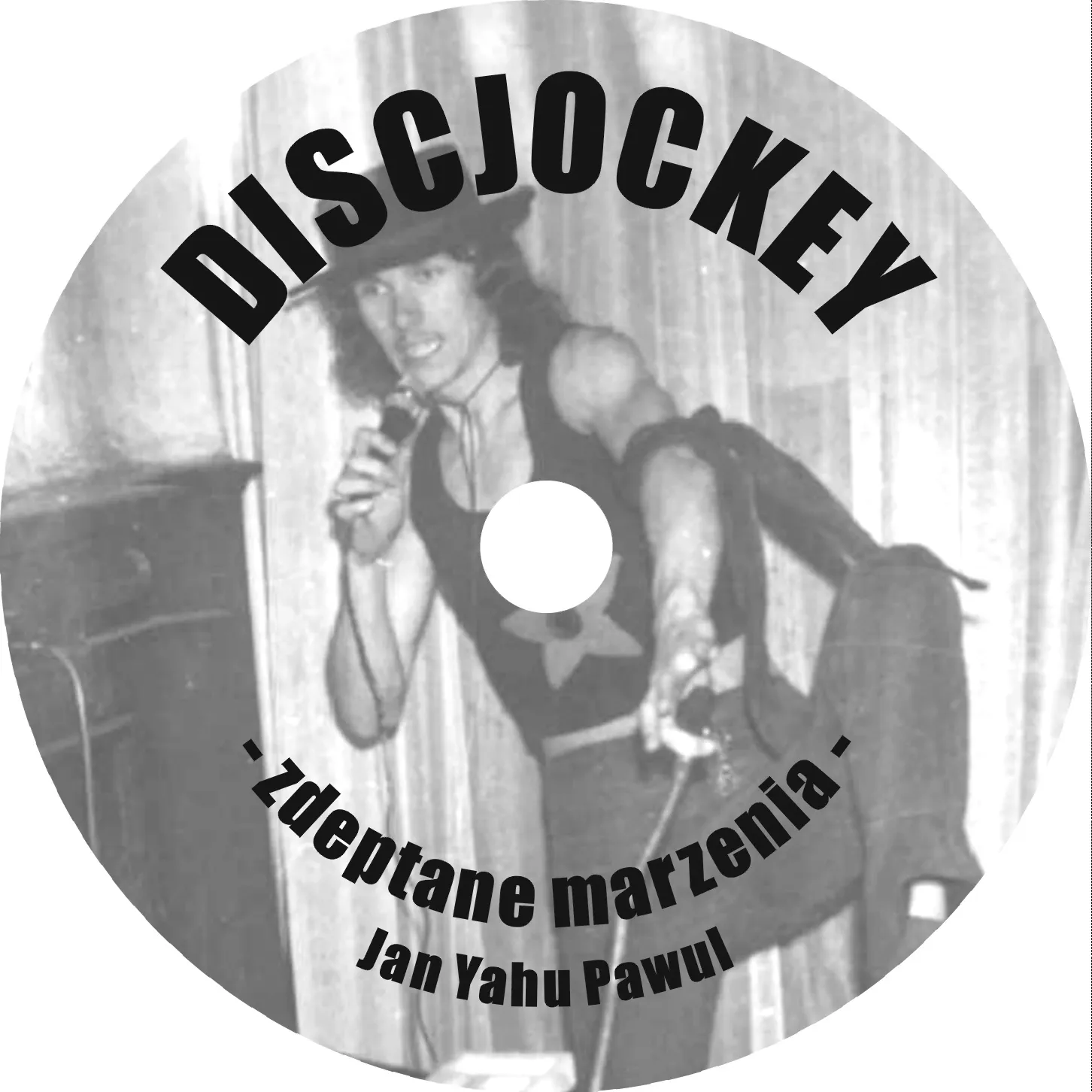
This isn’t just another book about disco. It’s told by the people who built it.
This book is a rare deep dive into the roots of disco, told directly by the DJs, artists, producers, and journalists who lived through — and helped shape — the sound and spirit of the 1970s.
Inside, you'll find 30 exclusive interviews — honest, personal, and packed with untold stories. Each interviewee was asked the same set of carefully crafted, historically valuable questions. But while the questions are consistent, the answers are anything but. Together, they paint a vivid, multi-layered picture of a cultural movement that’s often misunderstood and rarely documented from the inside.
And this is just the beginning. The author has collected over 100 more interviews, which will be released in upcoming volumes of this ever-growing chronicle.
The result? A one-of-a-kind archive of disco history — raw, real, and rich with passion.
Whether you’re a lifelong fan, a music historian, or just curious about how the disco era really unfolded, this book is a must-read. No myths, no filters — just the voices of those who were there.
Here’s what Tony Hadland had to say about the book:
So Yahu went to great lengths to obtain as much material as he could by this route. He became an avid reader of Deejay and Radio Monthly, a UK-based trade magazine for disc jockeys, edited by journalist Ben Cree. Ben also formed the National Association of Disc Jockeys and I was a regional officer of that organisation. From time to time, I wrote articles for Deejay and Radio Monthly (for example, about working on Britain’s first quadrophonic mobile disco) and this is what brought me to Yahu’s attention. He started writing to me from Poland and our correspondence lasted many years. We are still in contact from time to time all these decades later.
I was just one of many people with whom Yahu corresponded. His contacts were many and varied. For example, in the early years of Madonna’s career, he was exchanging letters with her producer, Jellybean Benitez, at a time when few disco fans had even heard of him.
In the mid 1980s, Yahu managed to escape the stultifying cultural confines of Cold War Poland and came to stay with me and my family in Oxfordshire. This took an extraordinary amount of paperwork to arrange and it is hard to know which regime was the more intrusive – the Polish Communists who required paperwork signed by my “local militia” (the Henley-on-Thames police were the nearest thing we could find that met this description) or the British authorities, who wanted to know which room in the house Yahu would be staying in – perhaps to know where to bug the place, if they chose to.
Yahu’s visit to Thatcher’s England gave him a chance to weigh up the advantages and disadvantages of seeking refuge in the UK. After some painfully serious consideration, including discussions with other Polish émigrés, he decided to return to Poland but later managed to move to the USA for a while to try his luck there. Without a doubt, this is a brave man who is totally committed to his art and is not intimidated by the “slings and arrows of outrageous fortune”, as Shakespeare put it. “Passion” is a word much over-used these days but it accurately describes Yahu’s love for disco and deejaying.
So, what is it that makes this book different and special? Yahu’s perspective is worldwide and not limited by being a part of some hip clique in, say, Manhattan, Manchester, Munich or Magaluf.
In contrast, Yahu did much of his research in real time, over many decades – he was taking note of events as they happened. This book is truly a labour of love and the product of almost a lifetime.
In conclusion, I commend this epic work to anyone seriously interested in the fuller story of the development of disco music and deejaying. It is a unique reference and no in-depth study of this cultural phenomenon can be complete without consulting it. Yahu – I salute your passion and persistence!
Tony Hadland
Oxfordshire, England, 16 July 2014